Your cart is currently empty!
Childhood Foods
Brisbane School Tuckshop to British School Dinner: My Anglo-Australian Childhood
In the British summer of 1969, my family boarded a flight as ten-pound poms, trading the familiar, rain-swept streets of Kingston-Upon-Hull, England, for Brisbane’s bright, subtropical heat. Settling into our new Queensland home in the 1970s, we found the culture shock didn’t just come from the climate—it came at the dinner table. We went from a world of grey winter afternoons fuelled by fish and chips and Sunday roasts to a sun-drenched landscape of corner milk bars, frozen Sunnyboys, and the challenge of working out how to cook a traditional Sunday roast when it was 35 degrees in the shade.
What we ate at Home
With English parents, dinner was distinctly British-influenced.
- Sunday roast usually beef or lamb, roast potatoes, carrots and peas, with gravy.
- Bangers and mash with onion gravy.
- Shepherd’s pie or cottage pie.
- Stews and casseroles, made with chuck steak and plenty of potatoes and carrots.
- Fish and Chips, generally bought on a Friday night, usually eaten at home with added vinegar.
- Puddings: rice pudding, golden treacle pudding, and bread and butter pudding (YUK).
We ate a little differently in warm weather, usually ham and salad or sandwiches, so Mum didn’t need to use the oven.
The School Tuckshop – a Childhood Institution
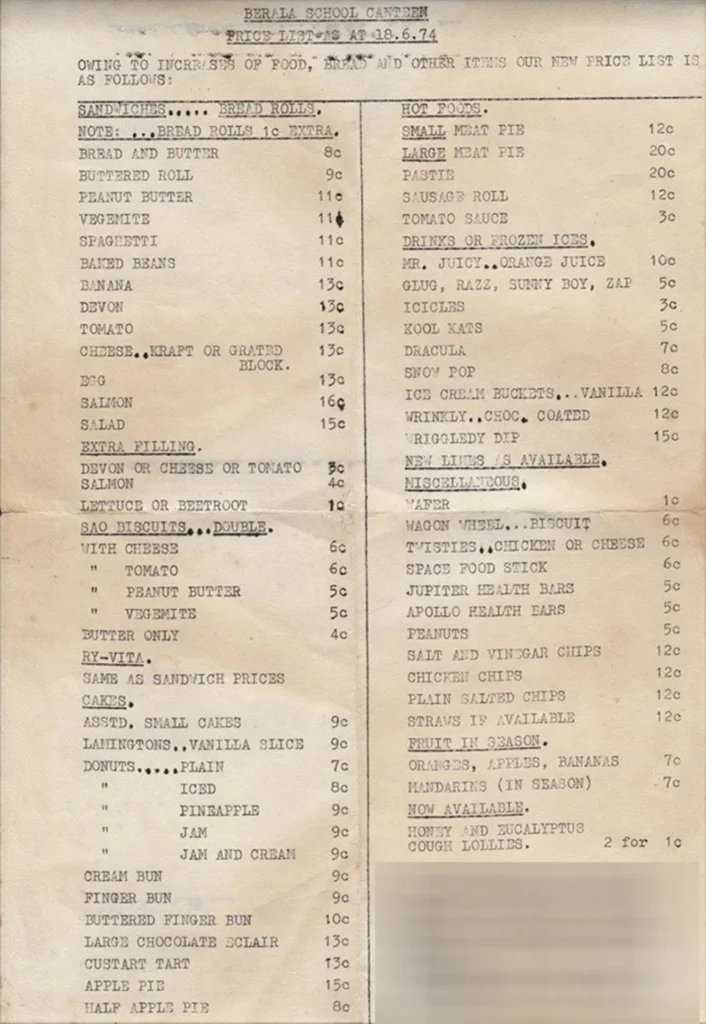
For many of us, the tuckshop was one of the school’s great attractions. Unlike other Australian states, where school canteens are more common, Queensland has a long tradition of calling them tuckshops. Mums generally volunteered to serve food and drinks and prepare lunches.
How to order Tuckshop
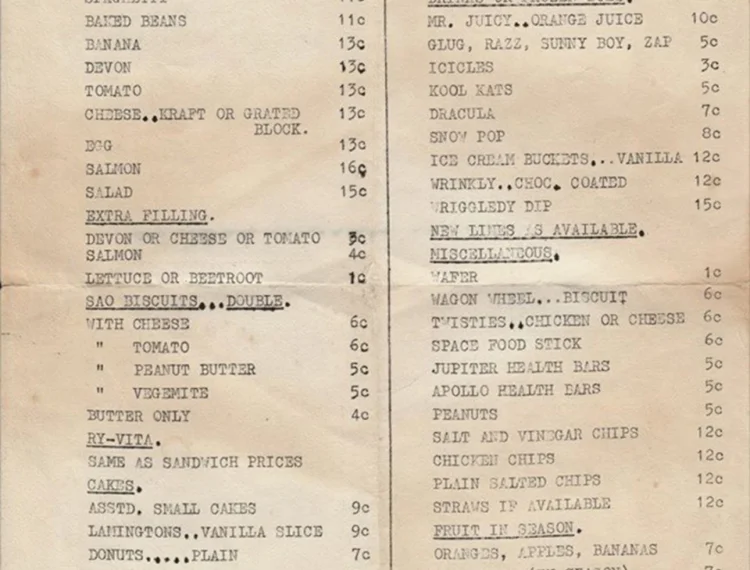
Hot Food – Meat pies and sausage rolls.
Sandwiches and Rolls – Egg and lettuce, Vegemite, cheese, or peanut butter.
Drinks and treats – a bottle of Coke or Fanta, a classic Sunnyboy ice block, cream buns with jam, and lollies.
The breaks – Food was split between a little lunch and a big lunch.
The Brown Paper Bag – First thing in the morning, you wrote your lunch order on a brown paper bag with a lead pencil. You put your loose change inside, folded the top over, and dropped it into a box in your classroom.
The Midday Surprise – When the lunch bell rang, the excitement was finding your bag. The brown paper bag would be translucent with grease from the sausage roll or meat pie. You would then carefully open the meat pie, squeeze on your tomato sauce, and eat it on a wooden bench in the shade beneath the school building.
The playtime treats – If you were lucky enough to have a few cents in change from handing in your finished bottle of lemonade or from your tuckshop lunch, you would line up at the tuckshop window for a pink-iced finger bun or a packet of chips. One of my favourites was a cream bun.
The Yo-Yo Migrant
Growing up between Brisbane and England in the 1970s and 1980s meant my culinary musical chairs was at school. I was fully adapted to the Aussie school way of doing things, but in 1979 my family moved back to the UK.
From Sun-Drenched to Steamy Halls – I went from a casual Brisbane routine of writing my lunch order on a brown paper bag and exchanging my lemonade bottle for lollies to the British dinner hall. I must admit the food was grim.
School Dinners Tickets
Buying Tickets: On Monday mornings, students handed over their money for a booklet of 5 paper tickets, which they gave to the dinner lady when they received their school dinner.
The Free School Meal stigma: Children from low-income families, including me, didn’t have to pay for their school meal, but the ticket you received was a different colour from those for paid school dinners.
Trading and Selling: One good thing about school dinners was that you could sell them. I don’t think it was allowed, but many of us did, and I enjoyed going to the local chippy instead.
I remember soggy veg, cabbage, carrots, and Brussels sprouts, boiled for hours until they turned to mush. There was lumpy mash, which I assume came from powder packets (like Smash). There was also a mystery meat, a gristly stew, and sausages that were incredibly greasy. The only saving grace was dessert, though not always. You either loved or hated the semolina with jam. It is a hot, milky pudding made from wheat grains. Everyone ate semolina their own way. You either ate around the edges, saving the jam for the last bite, or stirred the whole bowl until the pudding turned bright pink.
Food has a remarkable way of taking us back to our childhood. I know the smell of roast beef takes me back to my childhood, when my mother cooked it for Sunday dinner. If you grew up in Australia in the 1970s, I would love to hear your memories.
- What was your favourite tuckshop snack?
- Did you prefer a meat pie, a sausage roll, or something sweet?
- What did your parents pack in your lunchbox?
- Do you remember the Lemonade Van?