
Your cart is currently empty!

Why Are Death Certificates So Important in Family History?
The clues that can reveal family secrets
Have you ever ordered a death certificate for an ancestor and wondered whether it was worth the cost?
If you are researching your family history, I would say yes!
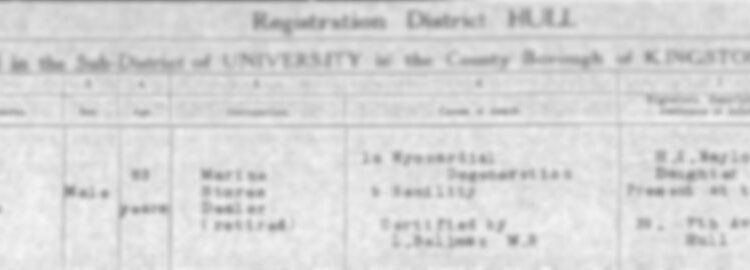
A death certificate can be one of the most valuable documents in your family history research. It can provide information about an ancestor’s final days, family, occupation and where they lived. Sometimes it can even help solve a mystery that has remained hidden for generations.
I discovered how important a death certificate could be while researching my family history. My great-great-grandfather had a secret; he was a bigamist. Through my research, I found that he had confessed his true name to the attending priest on his deathbed.
My great-great-grandfather was born at a time when divorce was expensive and difficult to obtain, especially for the working class. It was much easier to hide one’s identity.
A death certificate might not tell you the whole story, but it can give you the clues you need to begin your search.
What can you learn from a death certificate?
Death certificates are particularly useful because they bring together several pieces of information about a person at the end of their life. As with my great-great-grandfather, they can break down brick walls. I was told two surnames he was originally known by, neither of which was correct.
Depending on where and when the death was registered, you may discover:
- Full name of the deceased.
- Date and place of death (full address of hospital, nursing home, or private residence)
- Age at death.
- Occupation.
- Cause of death (the medical cause of death reported by a doctor or coroner)
- Place of death.
- Marital status at the time of death
- Parents’ full names and occupations (including mother’s maiden name)
- Children’s names, dates of birth and ages
- Name and relationship of the person who registered the death.
- Name of the cemetery or place of burial.
- Certificate number, date of registration, and official registration number.
Not every certificate will include all this information. The details vary considerably across countries and historical periods.
For someone researching an ancestor who migrated to Australia, these details can be particularly useful. For example, the birthplace might reveal a town or county in England you weren’t previously aware of. The parents’ names might help you locate a baptism record, while the marriage details could lead you to another certificate.
The informant’s name is also worth noting; it might be a son, daughter, or another relative who could help you identify previously unknown family branches.
How can I order a death certificate?
The best way to obtain a death certificate for genealogy in Australia is to contact the registry office in the State or Territory where the person died. https://www.library.gov.au/research/family-history/births-deaths-and-marriages provides links and a guide to obtaining birth, death, and marriage documents across Australia’s States and Territories.
The UK website https://www.gov.uk/research-family-history has recorded births, marriages and deaths since July 1837. When ready, you can download the certificate to your computer.
There are a few other ways to obtain death certificates besides contacting the registry office. Many genealogy websites, such as Ancestry and Findmypast, provide searchable databases of death certificates.
When searching for death certificates, it is important to have as much information as possible about the person you are researching. The full name, date of death, and place of death are essential. An approximate date of birth can also help narrow the search.
Who can apply for a death certificate?
It is important to respect privacy and legal regulations when seeking information about someone’s death. Therefore, access to death certificates is restricted, with requirements for immediate family members and time-lapse periods.
Some Useful Information
Death notices in newspapers are very valuable for finding further details about the deceased, such as family members, occupations, date of death, and age.
Have you ever found something unexpected on a death certificate? Perhaps an unknown marriage, a different name, an unfamiliar birthplace, or a relative you did not know existed?
I would love to hear about your discoveries. They might help another family historian solve their own mystery.