
Your cart is currently empty!
My great-grandfather, Thomas Gradwell, served in the East Yorkshire Regiment during World War I.
I know when he enlisted, which regiment he served with, and where he was deployed.
I also found that he received his service medals, but I reached a point where there was nothing left to research. I wanted to understand what a regimental museum can offer in understanding the experiences of our military ancestors.
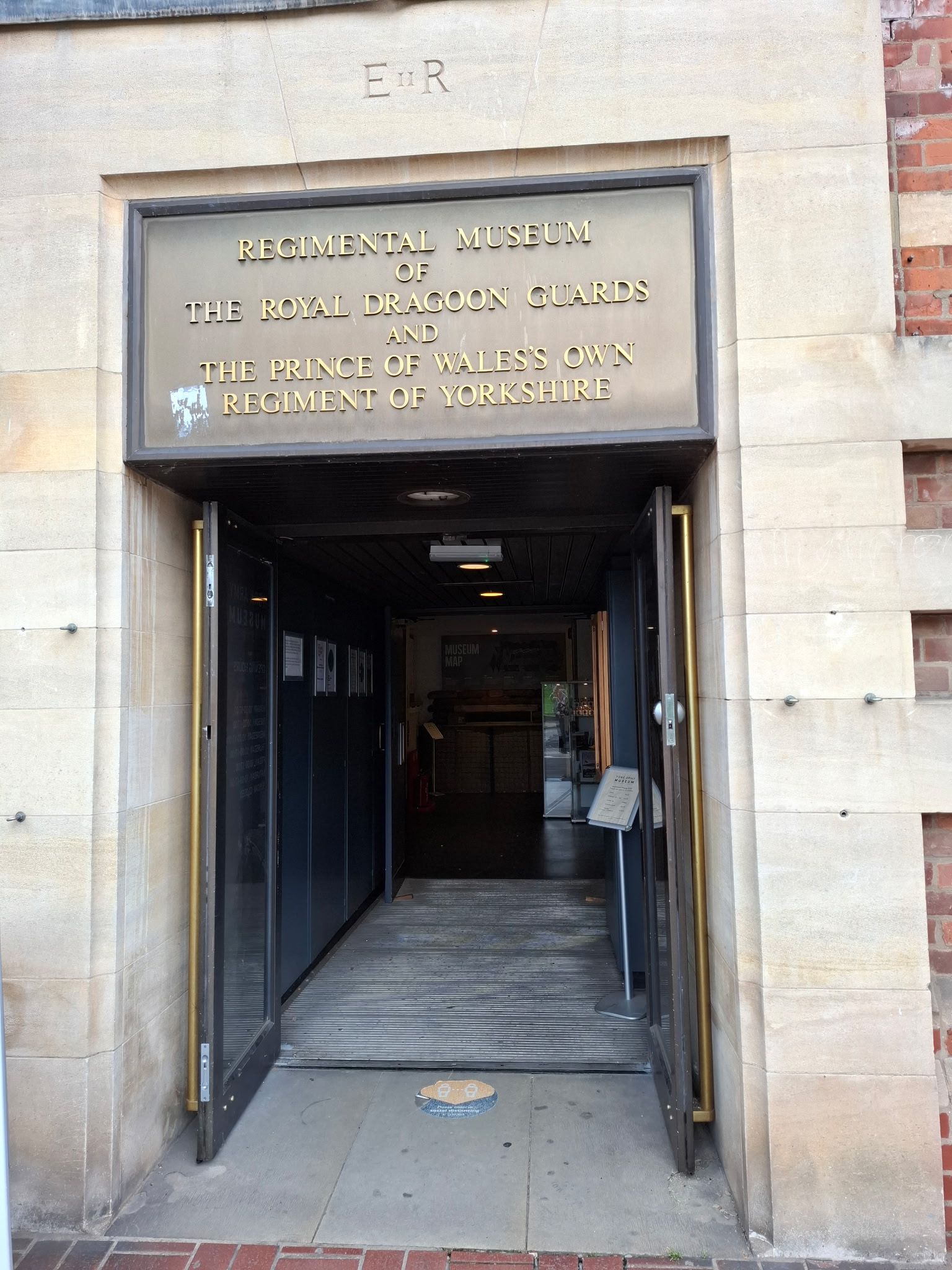
The York Army Museum is located directly opposite Clifford Tower in York. It is a regimental museum for the Royal Yorkshire Regiment and the Royal Dragoon Guards, housing collections from their predecessor regiments and spanning more than 300 years of military history.
As a museum, it does not hold service records or materials for every soldier who served. However, its research service can compile information from regimental archives and from an Ancestry subscription.
For pre-1920 research, the museum says its research can uncover things such as
Medal Index Cards
Medal Rolls
Surviving pension and service records
Extracts from regimental histories
War diaries showing battalion movements and actions
The York Army Museum has collections and research initiatives covering the history of British Army sports and their connections to local community athletics.
First World War Sports Ground Research – The museum collaborates with local communities to research and document WWI memorials. This includes tracking non-traditional community memorials, such as local sports grounds, town halls, and libraries built to honour fallen soldiers.
Regimental Sports History – The museum curates more than 300 years of history for the Royal Dragoon Guards and the Prince of Wales’s Own Regiment of Yorkshire. Within these regiments, team sports such as football, cricket, rugby, and equestrian events (polo) were extensively documented as vital to unit cohesion, physical fitness, and morale.
Personal journals, memoirs and shorthand accounts donated by individual soldiers who served in the East Yorkshire Regiment, the West Yorkshire Regiment, the Prince of Wales Own Regiment of Yorkshire and the Royal Dragoon Guards.
For general enquiries, educational outreach, and group bookings: Contact Allison Lynn at allison@yorkarmymuseum.co.uk
The collections, archives, and research team via Eleanor Davison or Caroline Pheby at
eleanor@yorkarmymuseum.co.uk or caroline@yorkarmymuseum.co.uk
If you wish to donate an object to the museum, contact Eleanor or Caroline to confirm whether the museum is the most suitable home for it, as the museum does not accept objects at the front desk.
The museum features a timeline of military operations and soldiers’ experiences from 1685 to the present. It highlights that in 1918, of the 5.7 million British men who served in the Army, 705,000 were killed. The West Yorkshire Regiment lost 13,010 members, while the East Yorkshire Regiment lost 7550.
Many Victoria Cross recipients have come from the Yorkshire Regiments, including Lt Jack Harrison VC, MC, who earned both the Military Cross and the Victoria Cross in 1917 for his bravery and self-sacrifice.
An original letter from Florence Nightingale to the parents of Pte Carter of the 5th Dragoon Guard, dated 1856, is on display.
Captain William Browne of the 6th Dragoons fought at the Battle of Waterloo on 18 June 1815, during the historic Union Brigade charge against French infantry columns. Captain Browne’s horse was killed beneath him, and he was wounded seven times. His battle-worn scarlet jacket survives today and is held in the museum.
It is only a small museum, but it was extremely interesting. The staff were very helpful with any questions you may have.