
Your cart is currently empty!
The Dream of a Holiday for Ordinary Working Families
We have all been in the position of working hard all year, raising a family, juggling life, and looking forward to a well-earned break. Today, booking a holiday might involve searching the internet, choosing a hotel, or travelling abroad. For many British families in the early twentieth century, however, a holiday was a much simpler affair and not always affordable.
The seaside had long attracted visitors. In the nineteenth century, the expansion of the railways made coastal resorts such as Scarborough, Blackpool and Bridlington accessible to more people. However, the opportunity to visit the seaside did not necessarily mean that a working family could afford to take a holiday.
In the 1950s and 1960s, holiday camps were an affordable holiday option, which was especially important in the post-war years. These camps provided a family-friendly environment for holidaymakers to enjoy their time.
The Holidays with Pay Act of 1938
The Holidays with Pay Act of 1938 was an important milestone in British working life. It gave certain wage-regulating authorities the power to require paid holidays for workers covered by their rules, typically up to one week.
However, it did not immediately grant every British worker a universal right to a week’s paid holiday. Some employers and trade unions had already negotiated paid leave, and access continued to vary across occupations.
The tradition of Wakes Weeks, when workers in particular industrial towns took holidays at the same time, also helped create demand for affordable accommodation and organised entertainment.
Cayton Bay: A holiday by the Yorkshire Coast
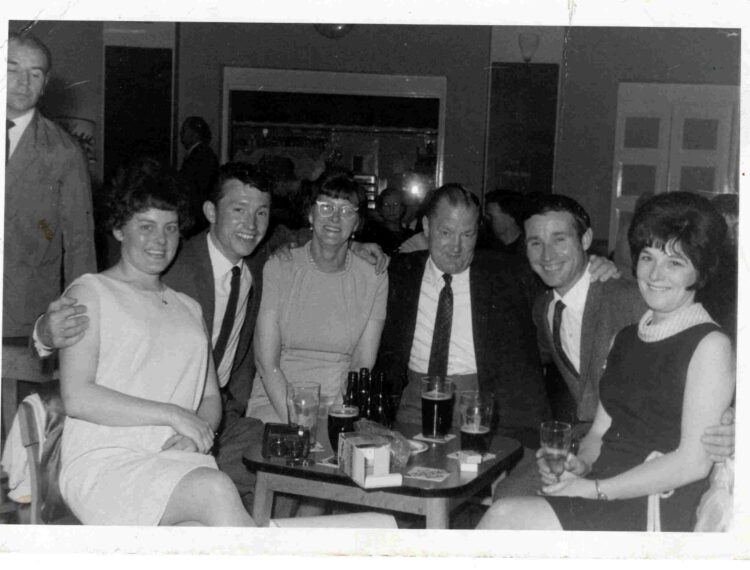
My family connection to this story stems from a photograph of my grandparents and Uncle and Aunty at Cayton Bay Holiday Camp near Scarborough.
Looking at family photographs can make a historical subject feel much more personal. I can imagine my grandparents enjoying time away from their usual routines, making memories together and experiencing a different way of life for a few days. They do look like they are having a lovely time.
Cayton Bay had a history that predated the post-war holiday boom. One of its early holiday centres was established by the National Association of Local Government Officers (NALGO). The camps opened in 1933, offering wooden bungalows, and converted buses, communal dining and recreational facilities within walking distance of the beach. During the Second World War, the camp housed children evacuated from Middlesbrough.
After the war, Cayton Bay became part of the broader story of Britain’s expanding holiday camp industry. In 1946, another operator, Wallis’s, took over the camp, and the site became known for its caravans, chalet accommodation and entertainment and had the slogan ‘Walli-days are jolly-days’.
When I look at my grandparents’ photograph, I wonder what their days at Wallis Cayton Bay Holiday Camp were like. Did they spend hours on the beach? I can imagine them sitting in a hired deck chair, complaining it was too hot. I can imagine them enjoying the entertainment and having a wonderful time meeting new people.
Their photograph is a small piece of our family history, but it also connects them to a much larger story about the changing lives of ordinary British people.
Billy Butlin and the holiday camp revolution
No history of British holiday camps would be complete without mentioning Bill Butlin, born in 1899. Billy Butlin had experience in the travelling fairground and amusement business. He understood that people wanted entertainment and value for money. He also recognised that families staying in seaside guest houses sometimes had little to do when the weather turned bad.
In 1936, he opened his first Butlin’s holiday camp in Skegness, Lincolnshire. He aimed to provide an enjoyable, lively holiday where guests could take part in activities and entertainment without having to organise everything themselves.
The idea proved popular, and a second camp opened at Clacton-on-Sea in 1938. Butlin’s offered something different from a conventional seaside guest house. Guests could enjoy communal meals, games, competitions, shows and organised activities. There was an emphasis on bringing people together and ensuring there was something to do throughout the day.
The famous Redcoats became an essential part of the experience. These entertainers and activity organisers encouraged guests to join in, helped create the holiday atmosphere, and became among the most recognisable features of Butlin’s.
The War and the Post-War Holiday Boom
The Second World War interrupted the development of the holiday-camp industry. Several camps were requisitioned for military use, and Butlin’s Skegness became HMS Royal Arthur. Its Filey site was also used for military purposes.
After the war, holiday camps expanded as people returned to civilian life and demand for leisure grew. The combination of organised activities, meals and accommodation appealed to families seeking a straightforward and affordable break.
What a Holiday Photograph can tell us
Family photographs are valuable because they show us more than dates and names. They offer glimpses into clothing, leisure, relationships and the experiences people chose to remember.
Do you have photographs of your parents or grandparents at a British holiday camp? Perhaps they visited Butlin’s, Pontin’s, Cayton Bay or another seaside resort. Their photographs may hold clues to a wider story about working life, family traditions and the changing meaning of a holiday in Britain.
Wallis Cayton Holiday Camp from the Yorkshire Film Archive. Amateur filmmakers Leonard and Jean Winter made this homemade 1950s movie, which shows life at the camp.